



ZachXBT Alleges Circle Logged $420M in Compliance Failures Since 2022
Blockchain investigator ZachXBT alleges Circle has recorded more than $420M in compliance failures since 2022. Here is the core claim and why it matters.
What ZachXBT Alleged About Circle’s Compliance Record
ZachXBT’s thread laid out what he described as $420 million in alleged compliance failures spanning four years. The investigation named fifteen separate cases in which Circle purportedly had opportunities to freeze or restrict suspect USDC flows but did not act, or acted too slowly.
1/ Welcome to the Circle $USDC files.
$420M+ in alleged compliance failures since 2022, including fifteen cases of the US-regulated stablecoin issuer taking minimal action against illicit funds. pic.twitter.com/OiWZz5MrVM
— ZachXBT (@zachxbt) April 3, 2026
Source: @zachxbt on X
The allegation comes less than two weeks after a separate dispute over Circle’s freeze authority. On March 23, Circle froze 16 USDC wallets, and ZachXBT identified 15 of those as exchange hot wallets unrelated to the cited money-laundering activity. That incident raised questions about whether Circle’s compliance tools were being applied accurately.
The contrast between the two events is notable. In one case, ZachXBT accused Circle of freezing the wrong wallets. In the April 3 thread, he accused the company of failing to freeze wallets tied to illicit activity at all. No public response from Circle to the April 3 thread was located at the time of publication.
According to the thread and secondary reporting from Bankless Times, Circle allegedly had hours to freeze exploit-related USDC flows bridged through CCTP in multiple cases but took little or no action. No court filing, regulatory action, or company ledger independently substantiating the aggregate figure or each of the fifteen cited cases has surfaced.
Why Alleged Compliance Failures Matter for Crypto Regulation
The U.S. Treasury’s Office of Foreign Assets Control has stated that sanctions-compliance obligations apply equally to transactions involving virtual currencies and traditional fiat currencies. OFAC’s published guidance requires members of the virtual-currency industry to avoid prohibited dealings with blocked persons and to report blocked property.
Circle markets USDC as a regulated, fully backed stablecoin. As of March 30, 2026, approximately $77.3 billion in USDC was in circulation, making it one of the largest dollar-denominated digital assets. Any pattern of compliance lapses at that scale would carry significant regulatory weight.
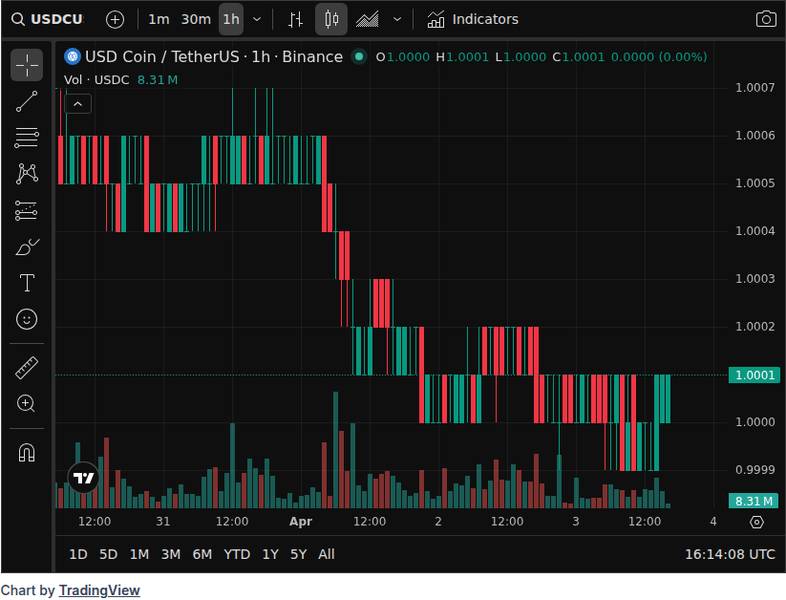
USDC traded at $1.00 with a market cap of roughly $77.36 billion and approximately $7.79 billion in 24-hour volume at the time of this report. The stablecoin’s peg held steady despite the allegations, suggesting the market has not yet priced in material compliance risk.
The regulatory significance lies in the gap between what OFAC requires and what ZachXBT alleges actually happened. If Circle, as a U.S.-regulated entity, failed to act on identifiable illicit flows, it could face scrutiny similar to enforcement actions that have targeted traditional financial institutions for sanctions violations. Recent regulatory moves in the region, such as Cambodia’s new cybercrime law targeting scam compounds, illustrate that governments are tightening enforcement across the digital asset ecosystem.
What the Claim Could Mean for Circle’s Public Standing
Circle has positioned itself as the compliance-forward alternative among stablecoin issuers. The company’s ability to freeze wallets, a feature ZachXBT criticized in the March 23 incident, is itself marketed as a regulatory safeguard. An allegation that this same authority was not exercised consistently undercuts that positioning.
this is your 10th reminder that centrally issued stablecoins are not actually yours
they can be frozen, unlike cash https://t.co/KpBw8PnLc1
— mert (@mert) March 25, 2026
Source: @mert on X
The broader crypto community has seized on the centralized freeze authority as a core concern. Solana developer Mert noted in a March 25 post that centrally issued stablecoins “can be frozen, unlike cash,” underscoring the tension between regulatory compliance and user sovereignty that Circle now finds itself at the center of.
The fifteen cases cited by ZachXBT, if even partially substantiated, would represent a pattern rather than isolated incidents. For an issuer managing over $77 billion in circulating tokens, the reputational risk extends beyond crypto-native audiences to institutional partners, banking relationships, and prospective regulatory approvals.
Large on-chain movements and whale-scale transfers already attract intense scrutiny in crypto markets. An allegation that the issuer behind the second-largest stablecoin failed to act on illicit flows adds a compliance dimension to that surveillance. Meanwhile, transparency concerns are not limited to stablecoins; the Ethereum Foundation’s recent staking disclosures show the broader market expects precision from major players.
Circle has not publicly addressed the April 3 thread. Until the company responds or an independent review examines the fifteen cited cases, the allegation remains unverified beyond ZachXBT’s published documentation. What is clear is that the claim has reopened debate over whether centralized stablecoin issuers can credibly serve as both compliance gatekeepers and neutral payment rails.
Disclaimer: This article is for informational purposes only and does not constitute financial or investment advice. Cryptocurrency and digital asset markets carry significant risk. Always do your own research before making decisions.