- Main event, leadership changes, market impact, financial shifts, or expert insights.
- Tariffs raise U.S. average to 20.6%.
- Potential EU counter-tariffs affect trade relations.
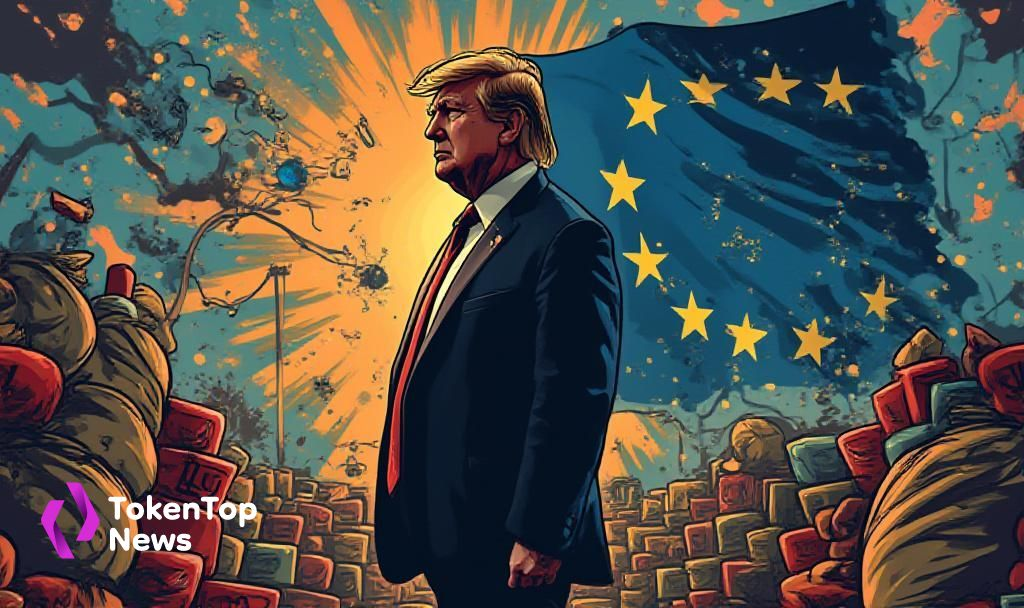
President Trump proposes a significant tariff increase to 15%-20% on European Union goods, aiming to reshape trade relations and economic strategies by 2025.
The proposed tariff hike impacts global trade dynamics, possibly altering risk appetite in financial markets. The proposal introduces tariffs of 15%-20% on EU goods, reflecting Trump’s historical emphasis on “reciprocal” trade. Average tariffs will elevate to the highest level since 1910 in the U.S. Households may experience an income loss of up to $2,800 annually due to the tariff pressure.
Trump’s Major Tariff Increase on EU Goods Proposed
Increased tariffs affect markets, notably with a 2.1% rise in the U.S. price level predicted by the Yale Budget Lab for 2025. Although digital assets aren’t directly targeted, macroeconomic shocks traditionally influence assets like BTC and ETH.
Donald Trump, President of the United States, “I am actively pushing for a minimum tariff of 15% to 20% on all EU goods in trade negotiations.”: Business Times
The EU plans counter-tariffs on U.S. imports worth €95 billion, with potential restrictions on metals and chemicals. Broader macro uncertainty correlates with volatilities in BTC and tokenized assets with hedging narratives.
Historical tariff policies under Trump have previously led to sectoral changes. Increased market volatility could emerge from potential regulatory adjustments if the Federal Reserve perceives a need based on previous patterns. Monitoring of Euro-U.S. asset flows remains critical for anticipating future changes.