



Strategy is the largest verified public Bitcoin treasury company in 2026 by a wide margin, followed in this comparison by Twenty One Capital, Metaplanet, Strive and Capital B. This article answers only the holdings question; the separate best Bitcoin treasury stocks shortlist evaluates risk-adjusted equity exposure.
Each company uses a different capital stack, reporting cadence and operating model. This ranking therefore shows the latest verified settled BTC alongside the evidence date, then evaluates per-share measurement, encumbrance, financing flexibility and disclosure quality. It does not combine company targets with completed purchases.

Ranking methodology and cut-off
TokenTopNews searched company filings, investor-relations releases and official corporate dashboards through July 31, 2026. A regulatory filing is the accounting anchor. A later company release or official dashboard can update holdings, but its observation date is retained so readers can see when figures are asynchronous.
Rank inclusion requires a public listing, a treasury-led strategy, a material verified BTC balance and sufficient disclosure to analyze shareholders’ claim. Miners are handled separately because production economics can dominate the equity. Private companies, ETFs and announced transactions that have not settled are excluded.
The wider market is much larger than this leaderboard. A 21Shares mid-year review counted around 200 publicly listed companies with nearly 1.28 million BTC, but that universe includes miners and operating companies. This ranking stays focused on treasury-led issuers and reports the latest verifiable balance for each row; it is not a claim that only six public companies hold meaningful Bitcoin.
| Rank | Company | Verified BTC | Evidence date | Holdings evidence | Denominator evidence | Data confidence | What must be refreshed |
|---|---|---|---|---|---|---|---|
| 1 | Strategy | 847,363 | June 31, 2026 | Company Form 8-K announcement | Public capital-stack disclosures | High | New purchase, issuance, debt or preferred filing |
| 2 | Twenty One Capital | 43,514 | March 31, 2026 | Form 10-Q | Filing-based share and collateral disclosures | High | Next quarterly filing or material financing |
| 3 | Metaplanet | 43,000 | Observed July 31, 2026 | Official company dashboard | Fully diluted shares and warrants need reconciliation | Medium | Latest filing, warrants and FX rate |
| 4 | Strive | 15,009 | May 12, 2026 | Quarterly results release | Common and SATA claims disclosed, but source dates differ | Medium | New purchase, SATA change or quarterly filing |
| 5 | Capital B | 3,139 | Observed July 31, 2026 | Official dashboard and company release | Warrants and convertibles need a current denominator | Medium-low | Euronext filing and financing update |
This is a latest-disclosure ranking, not a synchronized valuation table. The holdings tracker methodology explains why publication date, effective date and observation date must remain separate.
Largest Bitcoin Treasury Companies in 2026
1. Strategy: unmatched scale with a complex capital stack
Strategy reported 847,363 BTC and a $1.4 billion USD reserve on June 31. The disclosure followed 843,738 BTC on May 25, when the company also reported $6.7 billion of convertible-note principal and $15.5 billion of preferred notional. That combination makes Strategy both the scale leader and the company where capital-stack analysis matters most.
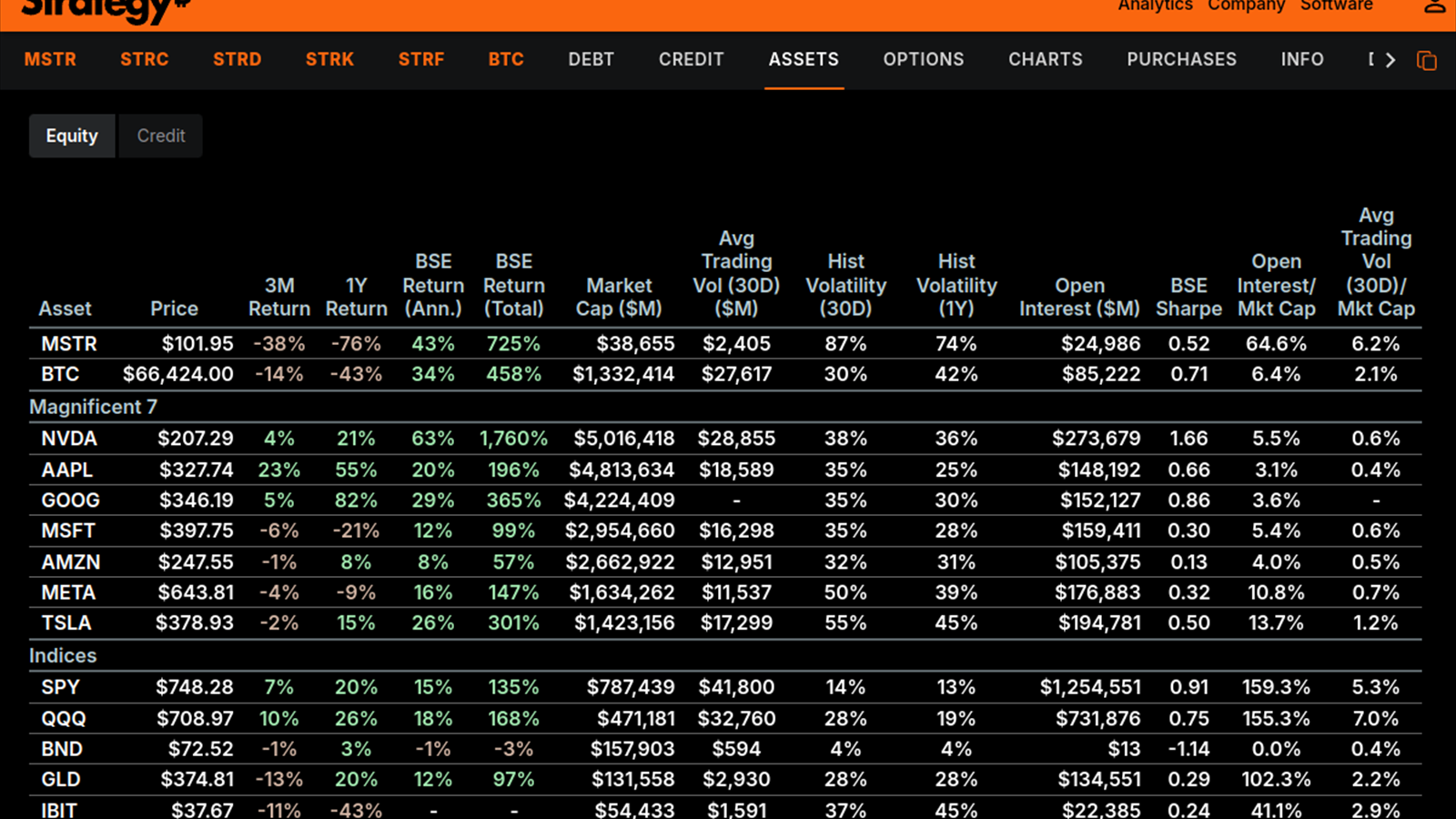
Liquidity, options depth and repeated access to capital markets are meaningful advantages. The trade-off is that common shareholders sit behind several fixed or senior claims, and the stock can move with both Bitcoin and the market’s willingness to value future financing optionality. The dedicated Strategy holdings analysis reconciles debt, preferreds and Bitcoin per share.
Strategy is the strongest fit for research centered on liquidity, scale and repeated public-market execution. Its main vulnerability is not a lack of Bitcoin but the interaction of premium compression, fixed charges and a crowded capital stack when financing conditions deteriorate.
2. Twenty One Capital: large holdings with collateral complexity
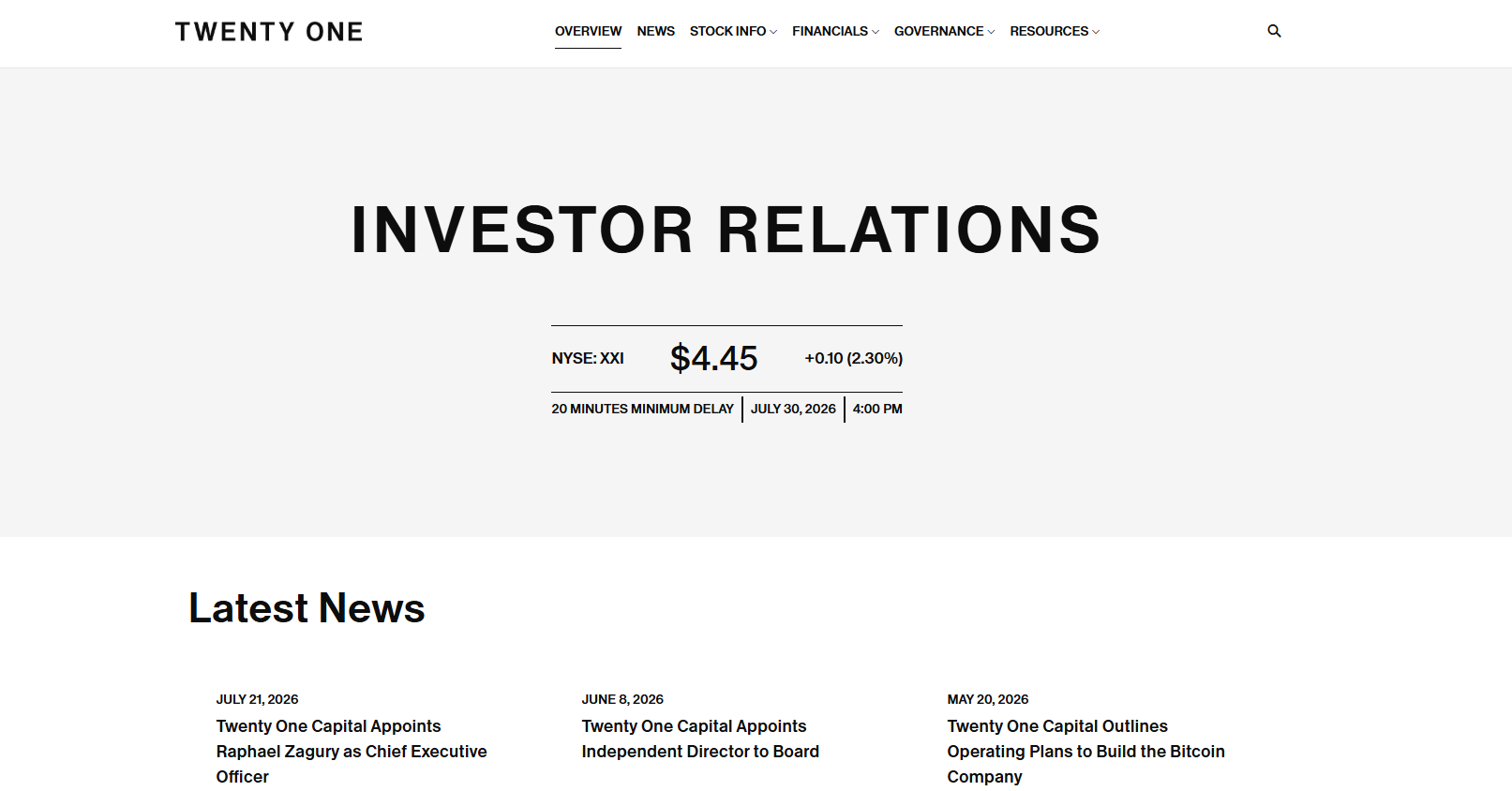
Twenty One’s March 31 Form 10-Q reported 43,514 BTC, 346.55 million Class A shares and 12,557 satoshis per share. It also disclosed that approximately 16,116 BTC collateralized convertible notes. The encumbrance does not erase those holdings, but it changes how much liquidity and downside protection they provide.
Management has outlined a broader operating platform spanning financial services, mining, capital markets and acquisitions. That could create cash flow beyond treasury appreciation, but proposed activities are not established earnings. A conservative valuation separates reported assets from optional future businesses, as discussed in our Twenty One Capital profile.
Twenty One is most relevant to readers studying a Bitcoin-native company that may develop a broader operating model. The present risk case must still center on collateralized BTC, execution and the gap between an announced expansion plan and established operating cash flow.
3. Metaplanet: the major Japan-listed treasury vehicle
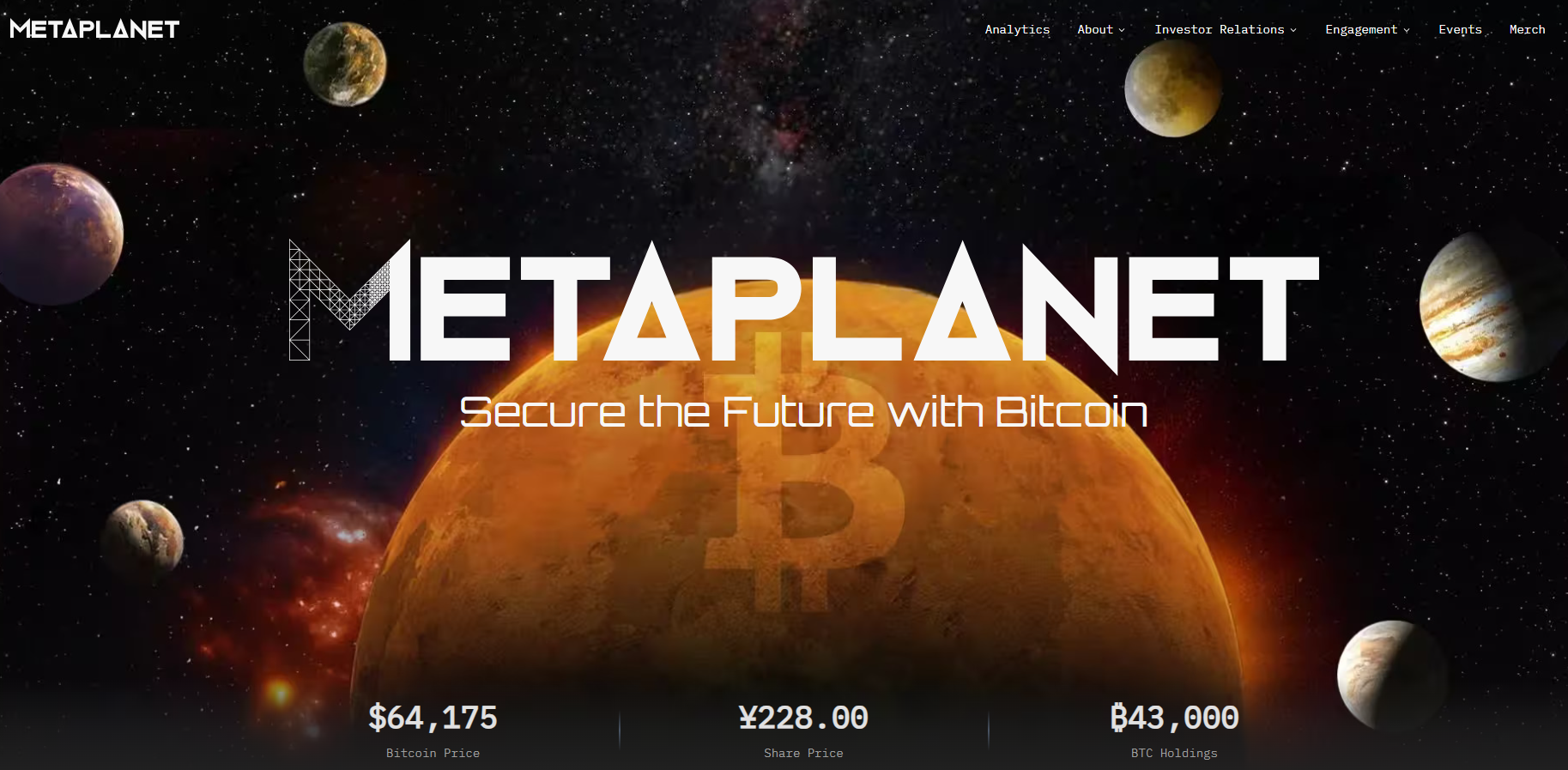
Metaplanet’s official homepage displayed 43,000 BTC and a ¥253 share price when observed on July 31. Its Japan listing creates a differentiated route to treasury exposure, but comparisons require synchronized yen share prices, BTC/USD, USD/JPY, issued shares, warrants and debt.
The company has made Bitcoin accumulation and Bitcoin-related KPIs central to investor communication. Its key analytical challenge is dilution: warrants and other securities can change the effective denominator materially. Our Metaplanet treasury analysis treats fully diluted shares and FX as first-class inputs rather than footnotes.
Metaplanet offers a large Japan-listed route to treasury exposure, which differentiates it from the U.S. issuers. Its main analytical risks are dilution and false valuation precision caused by combining stale share counts, warrant assumptions or foreign-exchange rates.
4. Strive: preferred-funded growth and an asset-management base
Strive reported 15,009 BTC at May 12 after purchasing 6,001 BTC in the first quarter and another 1,381 BTC through May 12. Its Q1 release also reported $87.6 million of cash, a $50.5 million position in Strategy’s STRC preferred and no short- or long-term debt at that date.
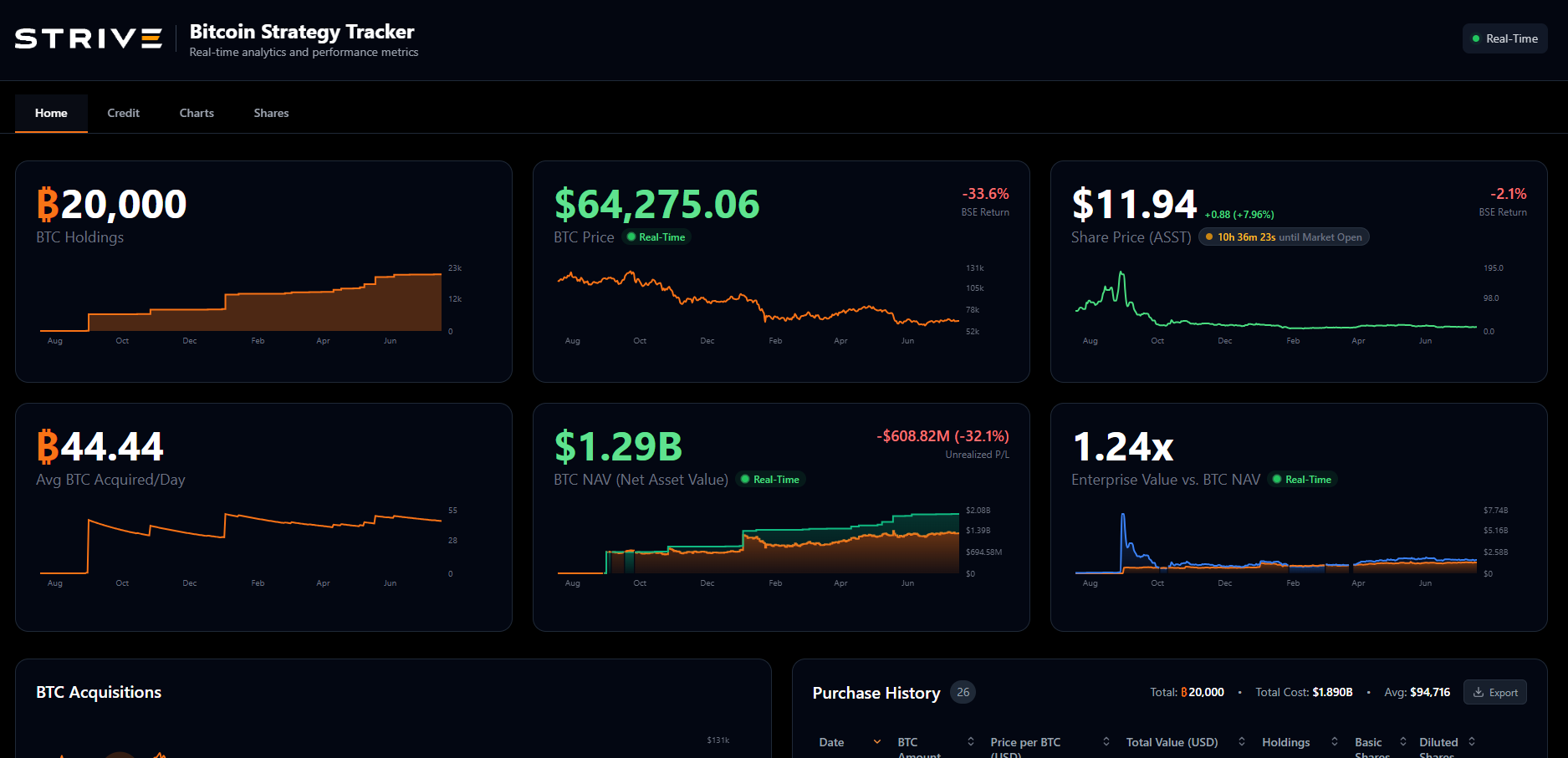
The important counterweight is SATA preferred stock. Strive reported 4.96 million SATA shares and a 13% annual dividend rate effective for the relevant period. Preferred equity can be longer-duration than debt, but the dividend still ranks ahead of common returns. The Strive treasury profile models that fixed claim alongside its asset-management business.
Strive is most relevant when the research question includes both treasury execution and an operating asset manager. The common equity must be evaluated after the preferred dividend burden and the integration risks created by rapid balance-sheet expansion.
5. Capital B: a smaller European challenger with heavy dilution analysis
Capital B’s homepage showed 3,139 BTC on July 31. Its May 18 release had reported 3,135 treasury BTC at an average acquisition cost of €90,451, funded alongside ATM issuance, warrant subscriptions and a private placement with attached warrants.
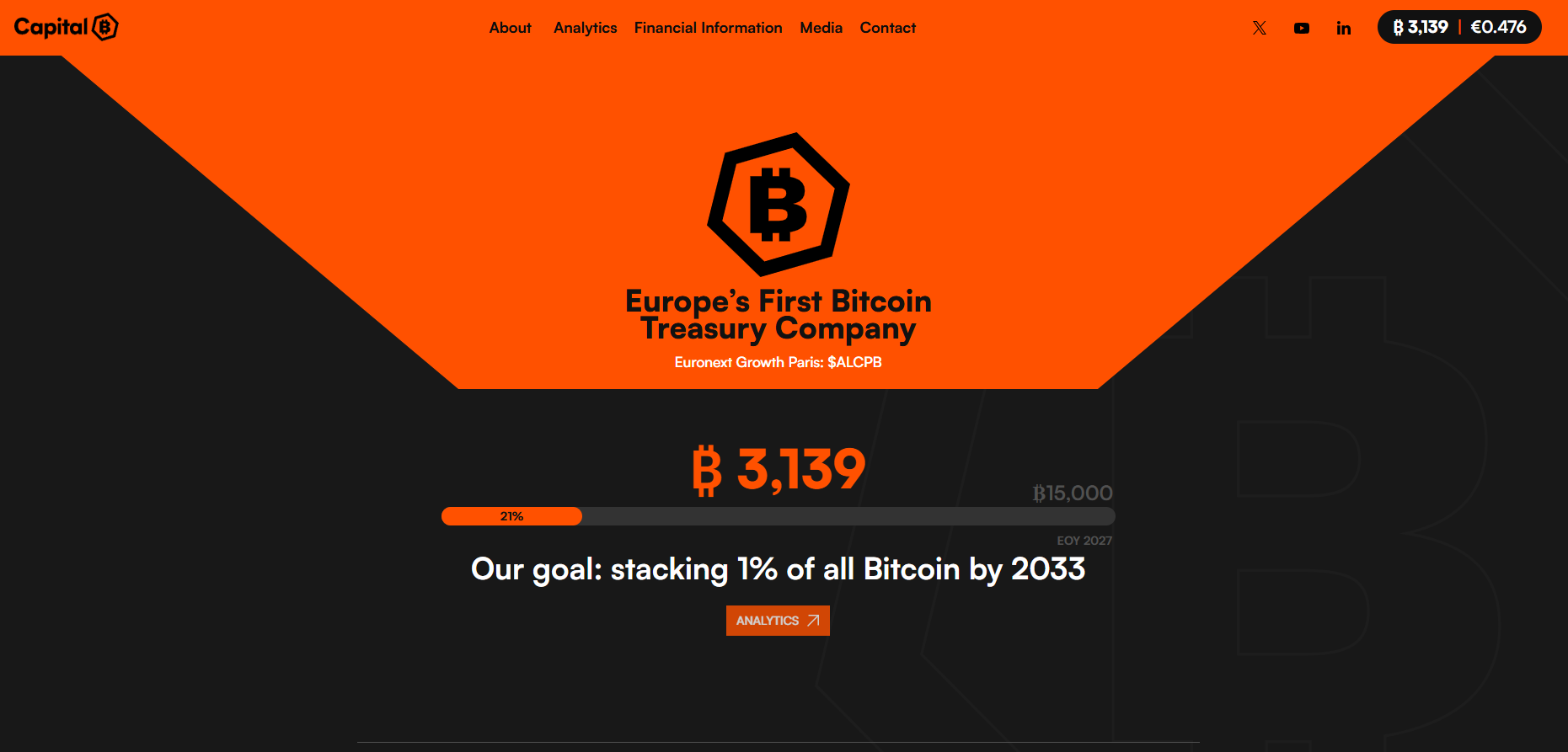
Its smaller scale can make successful per-share accumulation more visible, but the same feature increases liquidity and funding sensitivity. A basic-share calculation is insufficient when warrants and convertible instruments can expand the denominator. The Capital B company profile therefore starts with a security-level capitalization table.
Capital B gives readers a focused European challenger rather than another U.S. wrapper. Its smaller market, warrants and repeated capital raises make dilution, trading liquidity and continued financing access the central risks to test.
Holdings leaders are not automatically valuation leaders
Bitcoin Standard Treasury Company and Bitcoin Treasury Corporation belong in the next research pass, not silently in this five-row ranking. BSTR presents itself as a pure-play Bitcoin treasury, while BTCT positions itself as a Canada-listed Bitcoin-native company. Both require a synchronized settled-BTC, share-count and listing-liquidity snapshot before they can displace a ranked company.
| Emerging candidate | Distinct role | Why it stays outside the current rank |
|---|---|---|
| Bitcoin Standard Treasury Company (BSTR) | Pure-play treasury platform | Public-debut and transaction perimeter must be confirmed |
| Bitcoin Treasury Corporation (BTCT) | Canada-listed Bitcoin-native treasury | Latest balance and TSX Venture liquidity need same-date verification |
The ranking answers “who holds more verified BTC,” not “which share is cheapest.” A current valuation requires common market capitalization, debt, preferred claims, cash, operating assets and Bitcoin value at one timestamp. It also requires a defensible treatment for collateralized assets and securities that may convert.
| Analytical lens | Strategy | Twenty One | Metaplanet | Strive | Capital B |
|---|---|---|---|---|---|
| Holdings scale | Exceptional | Large | Large | Mid-sized | Smaller |
| Capital-stack complexity | Very high | High | High | High | High |
| Operating-business contribution | Established software | Developing | Limited/transitioning | Asset management | Technology services |
| Currency complexity | USD | USD | JPY and FX | USD | EUR and FX |
| Key diligence issue | Senior claims | Collateral | Dilution and FX | Preferred dividends | Warrants and liquidity |
The Bitcoin treasury mNAV framework should be run after this qualitative screen. A company can rank fifth in holdings and first on one valuation measure, or rank first in holdings while offering the least direct exposure per dollar invested.
How to choose between the five
Investors prioritizing liquidity and established capital-market access may begin with Strategy. Those seeking a Bitcoin-native operating platform can examine Twenty One, while Metaplanet provides a distinct Japan-listed structure. Strive adds a preferred-funded asset-management model, and Capital B represents a smaller European challenger.
The choice should match the risk one is willing to underwrite. Direct BTC removes corporate financing and governance from the thesis. A spot ETF adds fees and custody structure but normally keeps NAV tracking tight. Treasury equities add management and capital-markets optionality while also adding dilution, liability and premium risk.
No static list resolves those trade-offs. Before publication or investment research, refresh each holdings balance, diluted share count and senior claim. Then run a common Bitcoin drawdown and mNAV compression scenario across all five.
The ranking should also be read in layers. Holdings rank establishes scale, disclosure review establishes confidence in the number, and valuation analysis determines what the market charges for the residual claim. A company can lead the first layer while looking less attractive on the third, so the table is a research starting point rather than a substitute for security-level underwriting.
Conclusion
This ranking is a dated research starting point, not a permanent verdict. Treat it as stale after any settled BTC purchase or sale, equity or warrant issuance, convertible closing, debt or preferred change, or company correction to its holdings figure. A new quarterly filing also resets the evidence hierarchy even when the headline BTC balance appears unchanged. Before publication, refresh all five rows to one cut-off date and preserve the older figure in the notes rather than silently mixing snapshots.
Frequently asked questions
Why is Twenty One ranked above Metaplanet when their holdings are close?
Twenty One’s 43,514 BTC comes from a March 31 SEC filing, while Metaplanet’s 43,000 BTC was displayed on its homepage on July 31. The ordering follows the latest verified figures available, but the dates are not synchronized and must be refreshed before publication.
Why are MARA and other miners absent?
Miners combine treasury exposure with production economics, energy contracts and fleet investment. They deserve a separate ranking rather than being treated as pure acquisition-led treasury companies.
Which company has the safest balance sheet?
Holdings alone cannot answer that. Safety depends on unrestricted cash, unencumbered BTC, maturities, preferred dividends, operating cash needs and access to financing under stress.
Disclaimer: This article is for informational purposes only and does not constitute financial or investment advice. Cryptocurrency and digital asset markets carry significant risk. Always do your own research before making decisions.