



Crypto Narratives November 2026: What's Actually Moving the Market
What crypto narratives are driving markets in November 2026 — AI x crypto signal quality, post-Devcon 8 Ethereum, Solana after Breakpoint, and Binance Bangkok catalysts explained.
November 2026 is unusually event-dense for crypto. Devcon 8 ran November 3–6 in Mumbai. Solana Breakpoint took place in late October in Singapore. Binance Blockchain Week Bangkok opens in mid-November.
That calendar compression — three major industry events inside six weeks — creates a conditions where multiple narratives are competing for the same capital rotation simultaneously. Understanding which narratives have structural support versus which ones are running on event hype is the practical question entering Q4 2026.
How November 2026 Is Different From Recent Novembers
The last two Novembers were shaped by a single dominant factor each year. November 2024 was almost entirely driven by the post-US-election rally and Bitcoin ETF inflow momentum. November 2025 was dominated by the aftermath of the spot Ethereum ETF approval and the resulting L2 attention wave.
November 2026 has no single dominating factor at the same scale. Instead, several mid-sized narratives are active at the same time:
The macro context is calmer than prior years. US Federal Reserve rate policy has largely stabilized, removing the violent macro-driven liquidity shocks that whipsawed crypto in 2022–2024. Crypto is trading more on its own fundamentals and narrative cycles than on Fed meeting outcomes.
Bitcoin dominance is elevated. BTC dominance sits at approximately 52–54% as of late October 2026, which historically signals late-stage Bitcoin consolidation before broader alt rotation. That rotation has not clearly started, but the preconditions are present. Every November since 2020 has seen at least an attempt at altcoin season by the second or third week of the month.
Institutional infrastructure is mature. Custody, ETFs, and regulated derivatives existed but were new in 2024. By November 2026, institutional crypto infrastructure is established enough that large capital moves happen without the friction or novelty premium they carried two years ago. That normalization changes how quickly narratives get priced in.
The AI x Crypto Narrative: Signal vs Noise Entering Q4
The AI-crypto intersection has been a dominant narrative thread since early 2024. By November 2026, it has matured enough to distinguish genuine infrastructure from rebrand noise — though not all market participants make that distinction.

What has real signal in the AI x crypto space:
- Decentralized GPU compute networks (Render, Akash, io.net and peers) processing verifiable workloads with on-chain revenue metrics
- Agent framework protocols (Fetch.ai’s Agentverse, Autonolas, emerging competitors) building on-chain economic coordination for autonomous agents
- Projects with data verification layers — on-chain proof that claimed AI computation actually occurred
What is mostly noise:
- Tokens that added “AI” to their roadmap without changing the underlying product
- AI launchpads with no model output or usage metrics
- Generic “AI data marketplace” projects with no live data buyers
The practical signal test entering Q4: does the project have on-chain revenue, active model calls, or verifiable GPU hours? If none of those metrics exist, the AI label is primarily a narrative positioning choice, not a product description.
The broader AI x crypto market cap across the top 20 AI-labeled tokens is estimated at $28–32 billion as of late October 2026. That is down roughly 30–40% from the February 2026 peak but up approximately 2x from October 2025 levels, reflecting a narrative that has partially corrected from speculative excess without losing structural interest.
Ethereum Ecosystem: Post-Devcon 8 Attention Shift
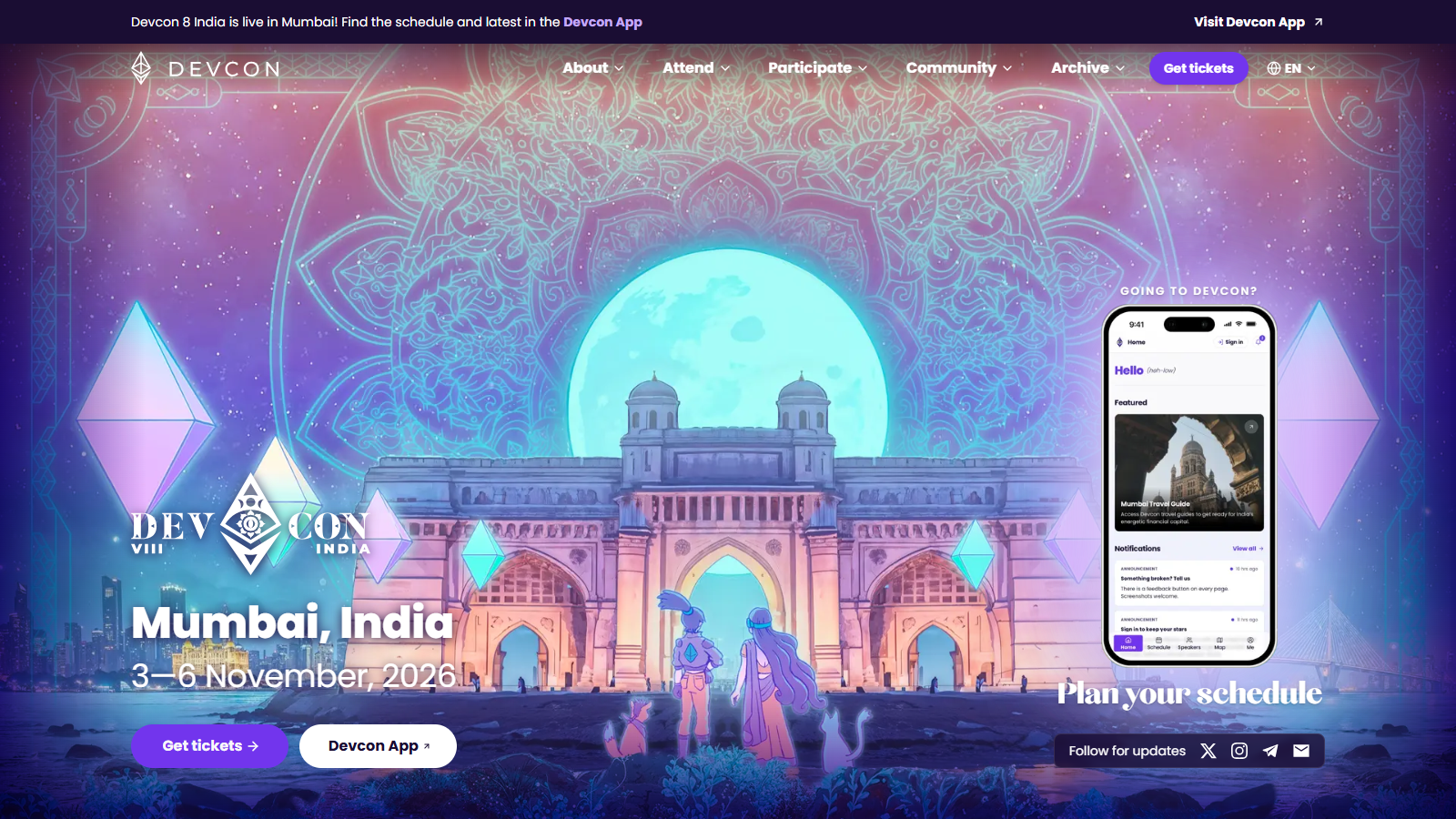
Devcon 8 in Mumbai (November 3–6) is the first Devcon held in Asia since Devcon 5 in Osaka in 2019. The geographic shift has practical consequences: Asian developer communities — particularly from India, Southeast Asia, and Korea — had lower representation at recent European and US-adjacent editions. Devcon 8 directly addresses that gap, and the downstream effect is a broader developer activation event than recent editions.
The technical agenda items most relevant to November narrative momentum:
EIP-7742 (dynamic blob target) and EIP-7623 (calldata repricing) both received Devcon 8 session coverage. If either moves toward firm inclusion timelines, L2 fee infrastructure becomes a near-term catalyst story again.
The based rollup track at Devcon 8 presented at least two live testnet results from teams building decentralized sequencer models. Based rollups are not a 2026 product story — mainnet launches are estimated for 2027 — but the testnet presentations shift them from theoretical to validated, which matters for developer and investor attention.
What the Ethereum narrative is not doing in November 2026: ETH price action is not purely Devcon-driven. Ethereum’s correlation to BTC remains high (~0.78 on a 30-day basis), which means macro and Bitcoin-driven capital flows still dominate ETH price behavior over most timeframes. Devcon produces roadmap clarity, not immediate liquidity events.
Solana After Breakpoint: Real Ecosystem or Still Speculative?
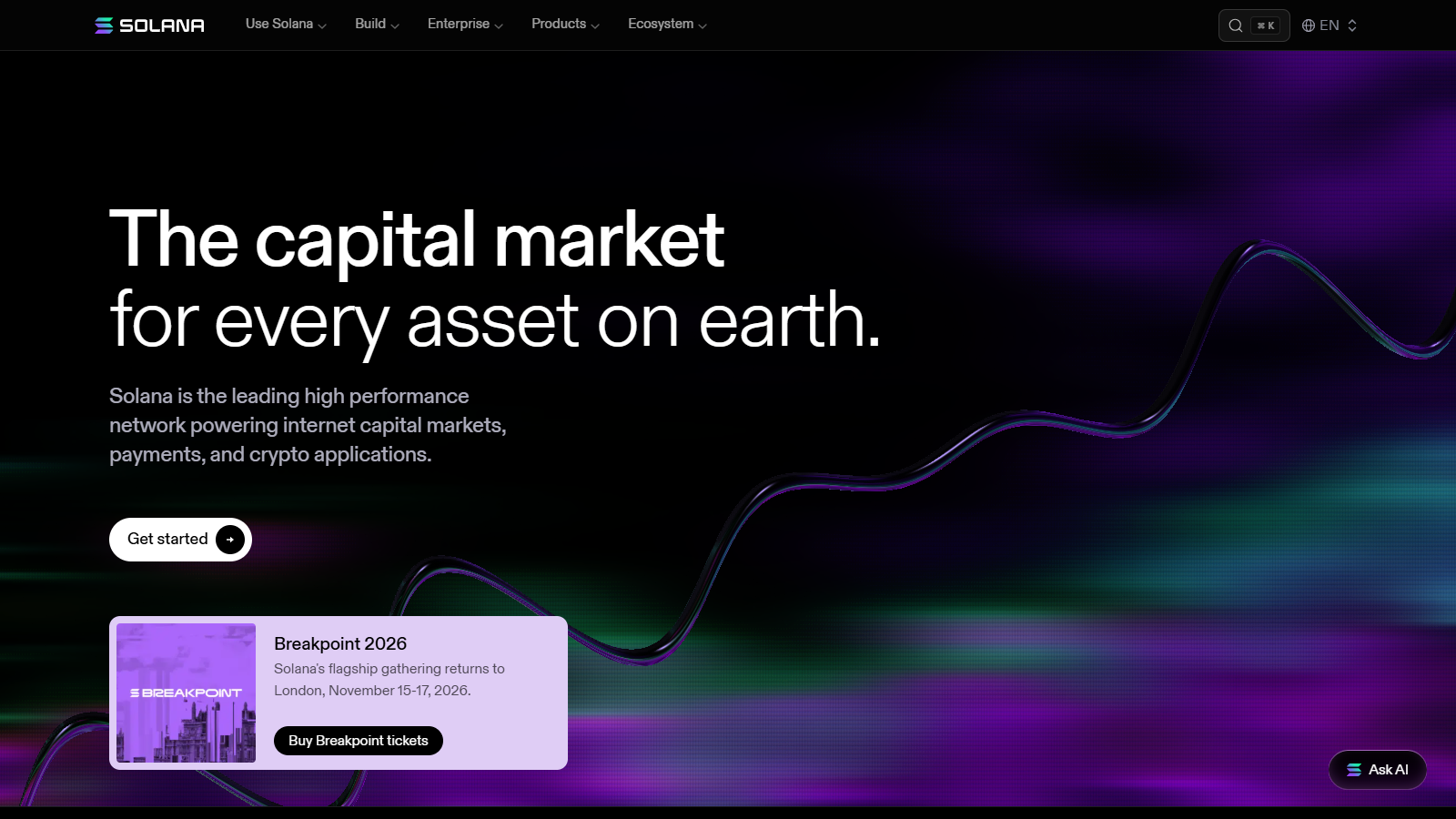
Solana Breakpoint 2026 ran in Singapore in late October. The ecosystem metrics entering the event were strong enough that the “is Solana real?” question has largely been answered in the affirmative.
| Metric | Solana (Oct 2026 est.) | Ethereum + L2s (Oct 2026 est.) |
|---|---|---|
| Daily active addresses | ~4.2M | ~3.8M (combined L1 + L2) |
| Daily DEX volume | ~$4.8B | ~$6.2B |
| NFT marketplace volume (monthly) | ~$380M | ~$290M |
| Developer activity (GitHub commits, relative) | Strong growth | Stable dominant |
| Stablecoin TVL | ~$9.1B | ~$62B |
Breakpoint 2026’s major announcements included expanded Firedancer client rollout timelines, Solana’s push into consumer payment infrastructure in Southeast Asian markets, and several new DePIN project launches.
The honest caveat: Solana’s stablecoin TVL and DeFi depth remain significantly below Ethereum’s ecosystem. High daily active address counts are partly attributable to retail activity and memecoin trading — user types with different retention profiles than DeFi liquidity providers. The ecosystem is real; its depth relative to Ethereum requires a longer qualification.
The post-Breakpoint narrative tends to produce 4–8 weeks of elevated developer attention and token activity for Solana-native projects. Whether that window extends into the broader Q4 rally cycle depends on whether altcoin rotation begins.
What Binance Blockchain Week Bangkok Might Catalyze
Binance Blockchain Week Bangkok (mid-November 2026) is a different type of event than Devcon or Breakpoint. It is primarily a business development and partnership announcement event, not a technical roadmap event. The catalysts it typically produces are:
Exchange listing announcements. Binance and its regional partners routinely use Bangkok Week as the venue for new token listing announcements, particularly for projects with Southeast Asian market relevance. Listings on Binance still produce significant short-term price action for mid-cap tokens.
BNB Chain ecosystem development. Binance’s own blockchain ecosystem typically gets a roadmap update during Bangkok Week. BSC and opBNB adoption metrics will likely be presented with forward guidance on 2027 priorities.
Regional DeFi and DePIN partnerships. Southeast Asia is an active growth market for crypto applications — remittance, unbanked population access, mobile-first DeFi. Bangkok Week tends to produce Southeast Asia-specific partnership announcements that may not be large in global dollar terms but signal where Binance is directing growth investment.

What Bangkok Week is unlikely to produce: systemic narrative shifts for BTC, ETH, or Solana. Its influence operates primarily at the mid-cap token and BNB ecosystem level. Projects with strong Southeast Asian user bases or BNB Chain integration are better positioned to benefit from its announcement flow than blue-chip layer 1s.
FAQ
What is driving crypto markets in November 2026?
No single factor dominates. The market is being shaped by a combination of post-Devcon 8 Ethereum roadmap momentum, post-Breakpoint Solana attention, pre-Binance Bangkok listing speculation, and the structural question of whether altcoin rotation off elevated Bitcoin dominance begins in Q4.
Is the AI crypto narrative still relevant in Q4 2026?
Yes, but with more differentiation than in 2024–2025. Projects with verifiable compute activity, on-chain agent infrastructure, or real model usage metrics retain structural interest. Projects that added AI to their branding without product evidence have largely reverted to lower valuations. The narrative has matured rather than disappeared.
Does Devcon directly cause Ethereum price increases?
Historically, Devcon produces roadmap clarity and developer attention increases over a 4–8 week window rather than immediate price reactions. ETH price is still primarily correlated to BTC and broad crypto market conditions in the short term.
What typically happens to altcoins in November?
November has historically been one of the stronger months for altcoin performance across multiple cycles. With Bitcoin dominance elevated entering November 2026, the structural conditions for rotation are present, but macro conditions and BTC price behavior are the gating factors — altcoin season does not begin on a schedule.
How should I interpret Binance Bangkok Week announcements?
As short-term catalysts for mid-cap tokens with BNB Chain or Southeast Asian exposure, not as structural narrative shifts. Listing announcements produce price action but rarely change competitive positions over a 3–6 month horizon.
Is Solana’s ecosystem growth sustainable?
Solana’s daily active user metrics and developer activity are genuinely high by historical standards. The sustainability question depends on whether the user Base — currently heavy in retail and memecoin activity — deepens into DeFi liquidity provision, stablecoin usage, and institutional DeFi, which are the metrics that produce durable TVL. That transition is underway but not complete.
Disclaimer: This article is for informational purposes only and does not constitute financial or investment advice. Cryptocurrency and digital asset markets carry significant risk. Always do your own research before making decisions.