



Bitcoin treasury companies are public companies that repeatedly buy and hold BTC. Strategy leads on holdings, while Twenty One Capital, Metaplanet, Strive and Capital B offer smaller, more complex exposures.
This guide compares Holdings, mNAV, Financing and Risk. More BTC does not automatically mean better common-share exposure because debt, preferreds, dilution and liquidity can reduce value per share.

Largest verified Bitcoin treasury companies
Strategy remains in a different size category from every other public treasury company. Its June 22 disclosure reported 847,363 BTC and a $1.4 billion USD reserve. Metaplanet displayed 43,000 BTC on its official corporate homepage when checked on July 22. Twenty One reported 43,514 BTC at March 31 in its first-quarter filing, with approximately 16,116 BTC pledged as convertible-note collateral.
| Company | Model | Latest verified BTC / exposure | Evidence date | Important qualification |
|---|---|---|---|---|
| Strategy | Treasury-led public company | 847,363 BTC | June 22, 2026 | Multiple preferred and debt claims sit ahead of common equity |
| Twenty One Capital | Bitcoin-native public company | 43,514 BTC | March 31, 2026 | About 16,116 BTC collateralized convertible notes |
| Metaplanet | Japan-listed treasury company | 43,000 BTC | Homepage observed July 22, 2026 | JPY share count, warrants and FX must be refreshed together |
| Strive | Treasury plus asset-management company | 15,009 BTC | May 12, 2026 | Preferred dividends affect common-equity economics |
| Capital B | European treasury-led company | 3,139 BTC | Homepage observed July 22, 2026 | Fully diluted share count is essential because warrants are material |
| Semler Scientific | Former medical-device treasury; acquired by Strive | 5,048.1 BTC transferred to Strive | January 16, 2026 | Historical transaction figure only; it is already included in Strive and must not be double-counted |
| DigitalX | Australia-listed digital-asset company | 503.69 BTC exposure | December 31, 2025 | 308.84 BTC was held directly and 194.85 BTC indirectly through DigitalX Bitcoin ETF units |
| Rumble | Video/cloud company with corporate BTC reserve policy | 210.82 BTC | March 31, 2026 | The filing reported a $19.1 million cost basis and $14.38 million quarter-end fair value |
| Bitcoin Standard Treasury Company | Pending pure-play Bitcoin treasury | 30,021.11 BTC committed at closing | June 2026 registration statement | The amount comprises 25,000 founder BTC and 5,021.11 private-placement BTC; it is not a settled public-company balance before closing |
| Bitcoin Treasury Corporation | Canada-listed Bitcoin-native treasury | 743.84 BTC | June 30, 2026 | Holdings include loaned principal but exclude accrued interest; diluted shares were 11,622,013 |
These figures are dated company disclosures, not a synchronized market close. They also represent different economic perimeters: direct BTC, indirect ETF exposure, an acquired balance and a closing commitment. Semler’s 5,048.1 BTC is already inside Strive’s subsequent totals, while BSTR’s 30,021.11 BTC remains conditional on transaction closing.
The table therefore supports a market map, but not a sum of independent holdings or a current mNAV ranking. That calculation requires share prices, Bitcoin price, FX rates, cash, debt and diluted shares from the same timestamp. Our public-company holdings report keeps those questions separate.
Company-by-company reading
The ten issuers below are not ranked again here. Each snapshot uses the same four lenses so readers can see what the headline BTC balance does and does not establish.
Strategy
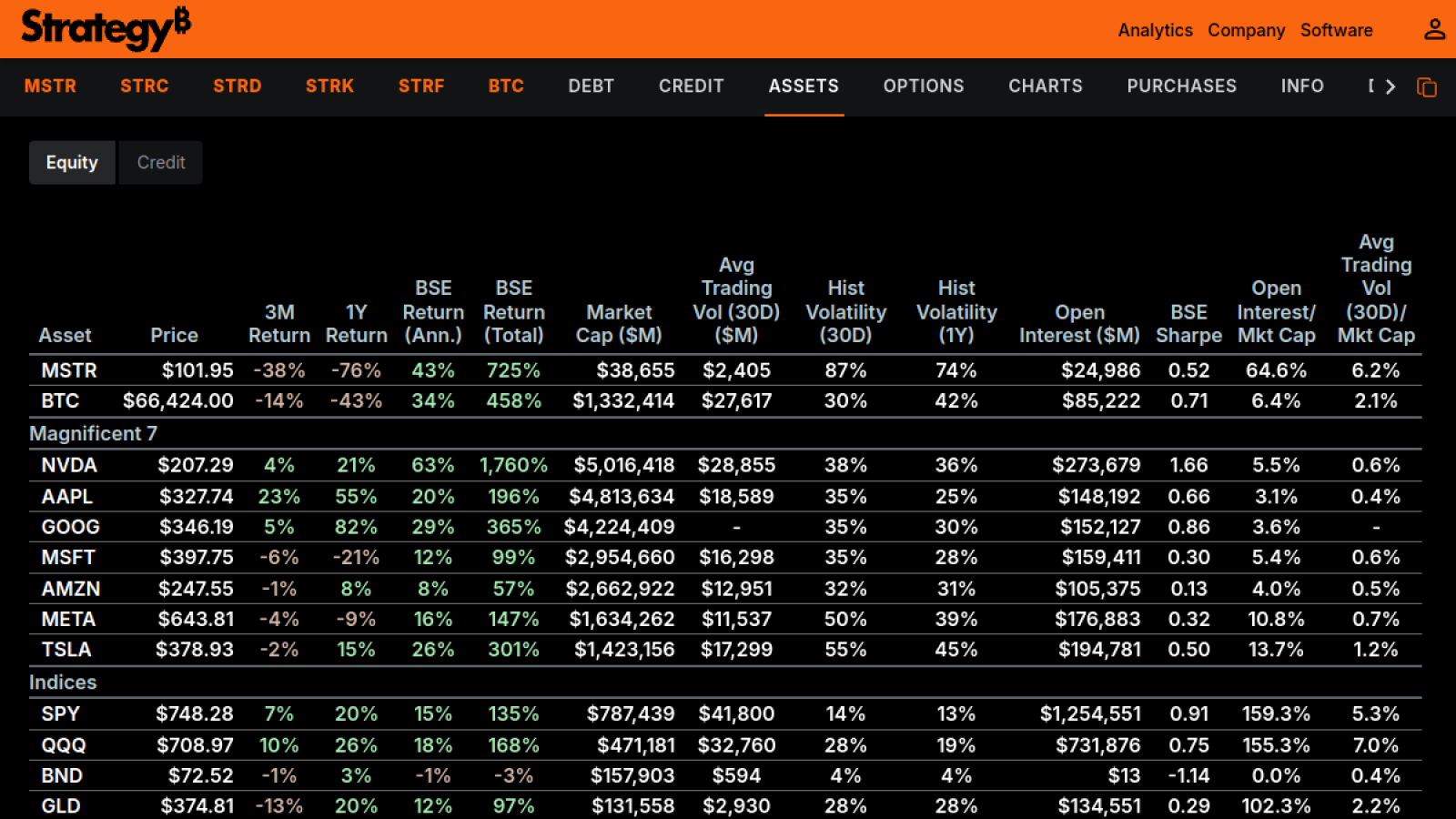
- Holdings: 847,363 BTC and a $1.4 billion USD reserve were reported on June 22, 2026, making Strategy the scale reference for the group.
- mNAV: A meaningful mNAV calculation must subtract debt and preferred claims from the BTC and cash value before measuring what remains for common equity. The headline holdings number alone cannot establish a premium or discount.
- Financing: Convertible debt, preferred securities, common issuance and the USD reserve give Strategy several funding channels, but each channel changes seniority, cost or dilution.
- Risk: The central risk is the interaction between a falling mNAV, fixed claims and a closed financing window. Scale does not remove refinancing or common-shareholder risk.
Twenty One Capital

- Holdings: The March 31 filing reported 43,514 BTC, 346.55 million Class A shares and about 12,557 satoshis per Class A share.
- mNAV: The BTC figure must be separated into pledged and unencumbered holdings before interpreting NAV support. Approximately 16,116 BTC collateralized convertible notes.
- Financing: Convertible notes and collateral create a different capital-stack profile from an unlevered BTC holder. The relevant inputs are collateral coverage, maturity and conversion terms.
- Risk: The headline balance may overstate practical liquidity if pledged BTC cannot be sold or redeployed freely during stress. Operating expansion also adds execution risk beyond the reserve.
Metaplanet

- Holdings: The official homepage displayed 43,000 BTC on July 22, 2026, but the observation date is not the same as a quarter-end filing date.
- mNAV: mNAV requires a synchronized JPY share price, BTC/USD price, USD/JPY rate, issued shares, warrants, cash and debt. A stale denominator can make the result look more precise than it is.
- Financing: Equity programs, bonds and warrants can fund accumulation while also expanding the fully diluted share count. Financing terms matter as much as the purchase amount.
- Risk: Currency conversion, warrant dilution and Japan-market liquidity can move the common-equity outcome even when the BTC balance is unchanged.
Strive

- Holdings: Strive reported 15,009 BTC at May 12 after first-quarter purchases and additional purchases through that date.
- mNAV: The common-equity NAV should show the SATA preferred claim separately rather than treating all BTC value as available to common shareholders.
- Financing: The Q1 release reported 4.96 million SATA preferred shares with a 13% annual dividend rate and no short- or long-term debt at the stated date.
- Risk: Preferred dividends, asset-management integration and rapid balance-sheet growth can reduce common-share accretion even when BTC per share rises.
Capital B
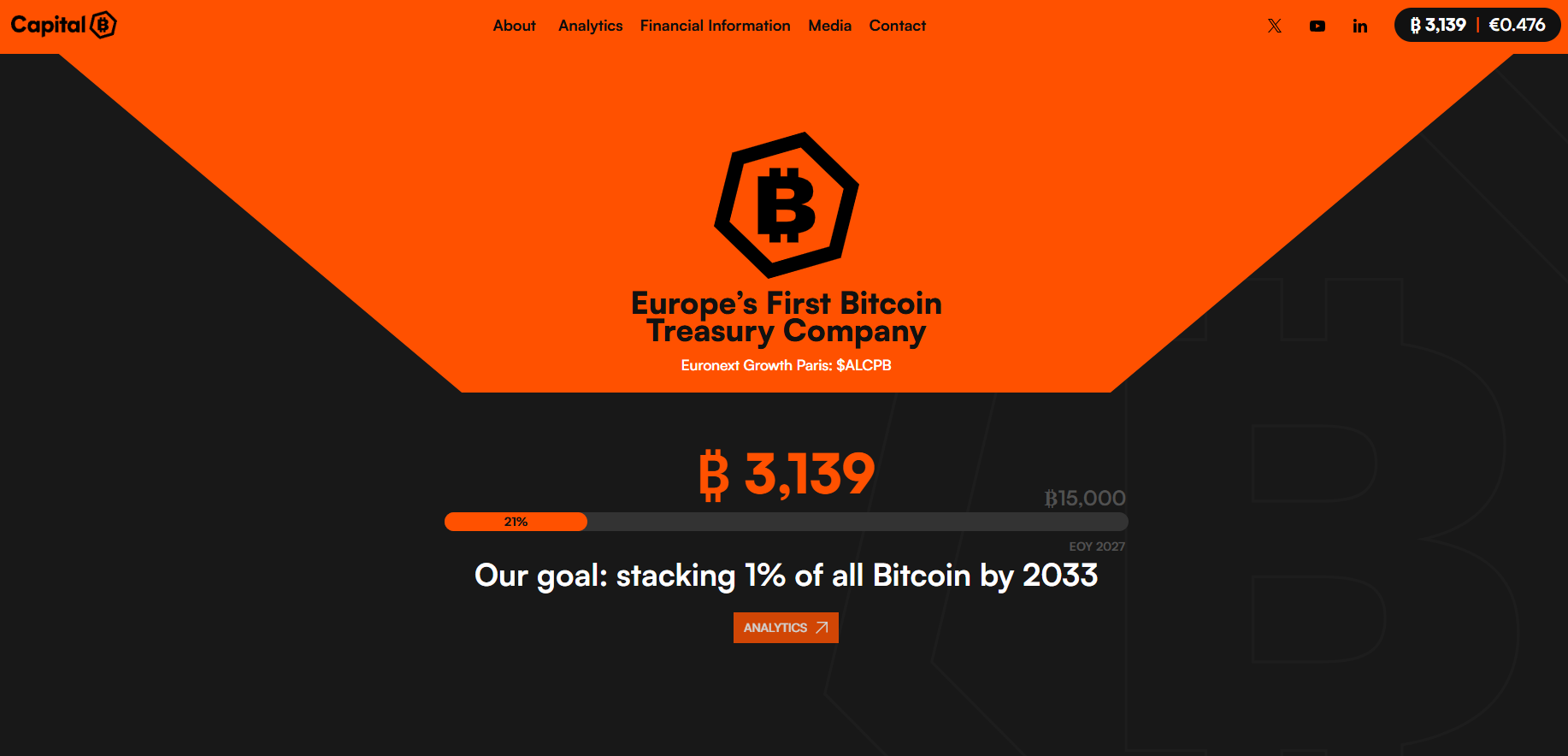
- Holdings: Capital B reported 3,135 treasury BTC in its May 18 release and its homepage showed 3,139 BTC on July 22, 2026.
- mNAV: The denominator must include warrants, convertibles and the fully diluted share count. A basic-share mNAV would overstate the value attributable to existing common holders.
- Financing: ATM issuance, warrant subscriptions and a private placement with attached warrants are central to the funding model, not secondary footnotes.
- Risk: Smaller scale creates greater sensitivity to liquidity, financing access and issuance costs. A modest BTC purchase can be offset by a faster-growing diluted denominator.
Semler Scientific

- Holdings: Semler’s 5,048.1 BTC was transferred to Strive after the acquisition, so the figure is a historical transaction balance rather than an additional current holding.
- mNAV: A standalone Semler mNAV is no longer meaningful after the transfer. Analysts should assess the BTC inside Strive’s current consolidated balance instead.
- Financing: The acquisition changed the ownership and reporting perimeter; it did not create a second independent treasury vehicle holding the same coins.
- Risk: The main risk is double-counting. Treating Semler’s historical BTC as separate from Strive’s later balance would overstate total market holdings.
DigitalX

- Holdings: DigitalX reported 503.69 BTC of exposure, split between 308.84 BTC held directly and 194.85 BTC represented by DigitalX Bitcoin ETF units.
- mNAV: The NAV calculation must distinguish direct coins from ETF exposure and identify whether the ETF units trade at a premium, discount or expense drag relative to spot BTC.
- Financing: The company is a digital-asset operating business rather than a pure treasury issuer, so operating assets, cash and portfolio structure belong in the valuation bridge.
- Risk: Indirect exposure, asset valuation and operating-company risk can make the headline BTC figure a poor proxy for common-share exposure.
Rumble

- Holdings: Rumble reported 210.82 BTC at March 31, 2026, with a $19.1 million cost basis and $14.38 million quarter-end fair value in its filing.
- mNAV: Bitcoin is one balance-sheet component, not the full NAV. A useful mNAV analysis must separate the BTC fair value from the video and cloud operating business.
- Financing: The treasury position was funded within an operating-company capital structure rather than through a dedicated pure-play BTC issuance program.
- Risk: Shareholders remain exposed to operating revenue, cash burn and corporate execution; BTC appreciation alone does not define the equity outcome.
Bitcoin Standard Treasury Company

- Holdings: The registration statement described 30,021.11 BTC committed at closing, including founder BTC and private-placement BTC; it was not a settled public-company balance before closing.
- mNAV: No reliable live mNAV should be published until closing, settled holdings, listing status, debt and diluted shares are confirmed at the same timestamp.
- Financing: Founder contributions and private-placement instruments define the initial capital structure, with the final denominator and attached securities requiring confirmation after the transaction.
- Risk: Closing, public-debut and transaction-perimeter risk are more important than the headline committed BTC figure.
Bitcoin Treasury Corporation

- Holdings: Bitcoin Treasury Corporation reported 743.84 BTC as of June 30, 2026, including loaned principal and excluding accrued interest.
- mNAV: NAV should clarify the treatment of loaned BTC, receivables, cash, debt and the 11,622,013 diluted-share figure before comparing it with pure treasury issuers.
- Financing: Its Canada-listed structure and loaned-principal model create different liquidity and counterparty assumptions from a company that simply holds coins in custody.
- Risk: Loan recovery, TSX Venture liquidity and the distinction between reported holdings and immediately available BTC are the key risks.
The market is broader than the headline leaderboard
The answer depends on the universe being counted. A mid-2026 21Shares market review counted around 200 publicly listed companies with nearly 1.28 million BTC, while a narrower BitcoinTreasuries pure-treasury screen showed only 11 public companies and 122,658 BTC in its dedicated Bitcoin Treasury category.
That distinction changes the reader’s conclusion. The broad market is useful for measuring adoption and concentration; the treasury-led screen is more useful for comparing a financing model. The same 21Shares report found 13 of 18 major digital-asset treasury vehicles trading below the value of their crypto holdings at its June 8 snapshot, which is a reminder that owning a large reserve does not guarantee a premium, easy financing or safe common equity.

How the capital-markets flywheel works
The model begins with an equity security trading above the value of the Bitcoin attributable to each share. Management can issue new shares or another security at terms that bring in more value than the proportional claim surrendered by existing holders. If the proceeds buy Bitcoin and the fully diluted share count grows more slowly than holdings, Bitcoin per share increases.
Assume a company owns 1,000 BTC and has 10 million diluted shares, equal to 10,000 satoshis per share. It issues 1 million shares and uses all net proceeds to acquire 150 BTC. Holdings rise 15%, while diluted shares rise 10%; the result is roughly 10,455 satoshis per share. The transaction is accretive on that narrow KPI, even though every existing shareholder owns a smaller percentage of the corporation.
That arithmetic is not free value. Issuance fees, preferred dividends, debt interest, warrants and corporate overhead consume part of the spread. A premium can also disappear before a financing closes. The full Bitcoin treasury business model should be tested transaction by transaction rather than described as a permanent flywheel.
Equity, convertibles and preferred stock create different claims
ATM common equity has no contractual coupon or maturity, but it dilutes voting power and future upside. Convertible debt limits immediate dilution while creating interest, maturity and conversion complexity. Preferred stock may be perpetual, yet its dividend and liquidation preference rank ahead of common shareholders. This pillar maps the instrument differences; the individual company profiles contain the issuer-level capital-stack evidence.
Strive offers a different example. Its May 14 results reported 15,009 BTC, no short- or long-term debt at May 12, and 4.96 million SATA preferred shares. Calling the balance sheet “debt free” is accurate under that disclosure, but it does not make preferred dividends economically irrelevant to common equity.
The metrics that decide whether common shareholders benefit
BTC holdings answer how much Bitcoin the corporation controls. They do not answer how much backs one share, what claims sit above that share, or what price the market charges. A disciplined dashboard combines stock and flow measures.
| Metric | Calculation | What it reveals | Common mistake |
|---|---|---|---|
| BTC holdings | Settled Bitcoin controlled | Scale | Including announced purchases |
| BTC per diluted share | BTC / fully diluted shares | Per-share exposure | Using basic shares only |
| BTC Yield | Change in BTC per diluted share | Treasury execution | Treating it as shareholder return |
| Equity mNAV | Market cap / adjusted BTC NAV | Price paid for net Bitcoin | Ignoring debt and preferred claims |
| Enterprise mNAV | Enterprise value / adjusted asset NAV | Whole-capital-stack valuation | Giving operating assets arbitrary value |
| Fixed-charge coverage | Liquid resources / interest and preferred cash needs | Survival capacity | Assuming BTC never needs to be sold |
Twenty One demonstrates why footnotes matter. Its March filing reported 43,514 BTC and 346.55 million Class A shares, or 12,557 satoshis per share, but also stated that about 16,116 BTC collateralized convertible notes. A headline holdings number cannot show the difference between unencumbered assets and collateral supporting a senior claim.
The same caution applies to company-created KPIs. Strategy and Strive both disclose forms of Bitcoin yield, while Twenty One uses Bitcoin per share and Bitcoin Return Rate. These measures can improve analytical visibility, but none is a substitute for total shareholder return, cash flow or audited financial statements. Any mNAV comparison should normalize the definitions before comparing companies.
Financing changes the payoff, not just the purchase capacity
Capital B’s May 18 acquisition release combined ATM issuance, warrants and a private placement. Its 3,135 BTC purchase cannot be judged without the securities that may expand the ordinary-share denominator.
A financing plan should be tested after a Bitcoin drawdown and mNAV compression. The key question is whether the company can meet coupons, dividends, maturities and operating costs without selling BTC or issuing deeply discounted equity.
mNAV is a price, not a quality score
Equity mNAV compares common market capitalization with BTC value after net liabilities and senior claims. Enterprise mNAV adds debt and preferred claims to the numerator. Both require the same timestamp for BTC, shares, debt, cash and FX.
A premium can reflect liquidity, financing access or expected BTC-per-share growth. A discount can reflect distress, dilution, governance or stale inputs. Publishing the inputs and timestamp is more useful than presenting one unexplained multiple
Risk map for common shareholders
Bitcoin price risk is only the first layer. If BTC falls 40% while a stock’s mNAV contracts from 2.0x to 1.0x, the common equity can lose far more than Bitcoin before considering dilution or fixed charges. The opposite can occur in a rising market, which is why these equities behave like leveraged, path-dependent claims.
Dilution risk appears when management raises capital below a defensible NAV or when warrants and convertibles expand the denominator. Refinancing risk rises as maturities approach or collateral values fall. Preferred-dividend risk is slower but persistent: unpaid or rising distributions can constrain common-equity value even without a conventional default.
Custody and governance determine who can move the asset, under what controls and with what disclosure. Accounting fair-value gains can increase reported earnings without producing cash, while fair-value losses can dominate a quarter without changing the number of BTC held. Investors should reconcile the cash-flow statement and financing notes instead of treating GAAP earnings as the treasury engine’s scorecard.
What investors should verify before comparing companies
Use the filing as the accounting anchor, then bridge later purchases with dated releases. Confirm settled, pledged and operational BTC; reconcile basic and diluted shares; and use one timestamp for BTC, equity and FX.
The public-company holdings report separates source, publication and observation dates. This process does not identify one universal winner; it shows what shareholders are paying for and which assumption must hold.
Frequently asked questions
Is the largest Bitcoin holder automatically the best treasury company?
No. Holdings measure scale, while common shareholders own a residual claim after debt, preferred securities and other liabilities. Valuation, dilution, financing cost and Bitcoin per diluted share determine whether that scale translates into attractive equity exposure.
Can BTC Yield be compared directly across companies?
Only after aligning definitions and share counts. Some issuers use assumed diluted shares, period averages or company-specific adjustments. Read the reconciliation and compare the actual change in Bitcoin per fully diluted share over identical dates.
Why can a treasury stock fall when Bitcoin rises?
Its mNAV premium can contract, new securities can dilute common holders, financing terms can worsen, or the operating business can disappoint. Bitcoin is a major input, not the only driver of the security’s price.
Disclaimer: This article is for informational purposes only and does not constitute financial or investment advice. Cryptocurrency and digital asset markets carry significant risk. Always do your own research before making decisions.